
 Image 1 of 4
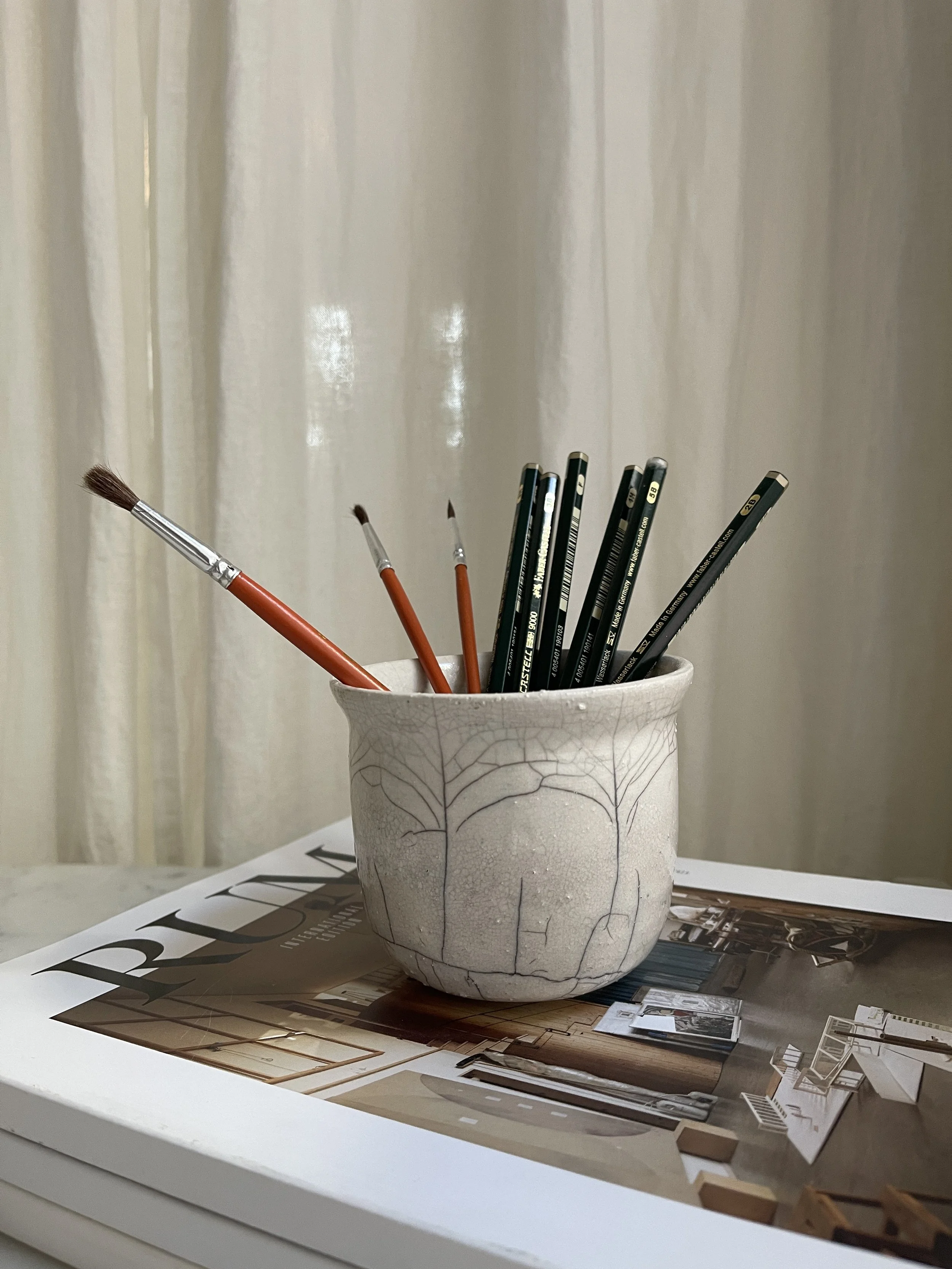 Image 2 of 4
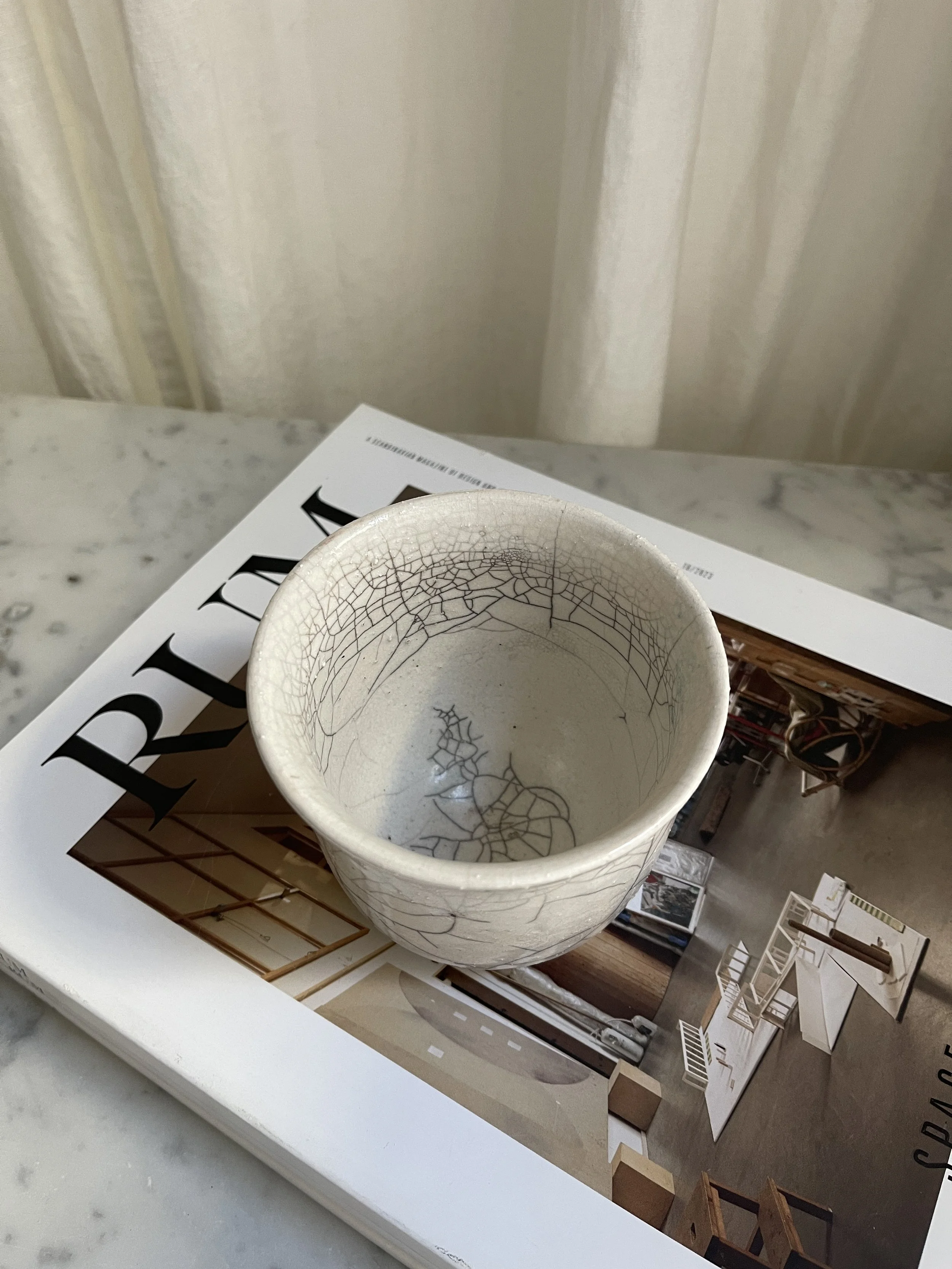 Image 3 of 4
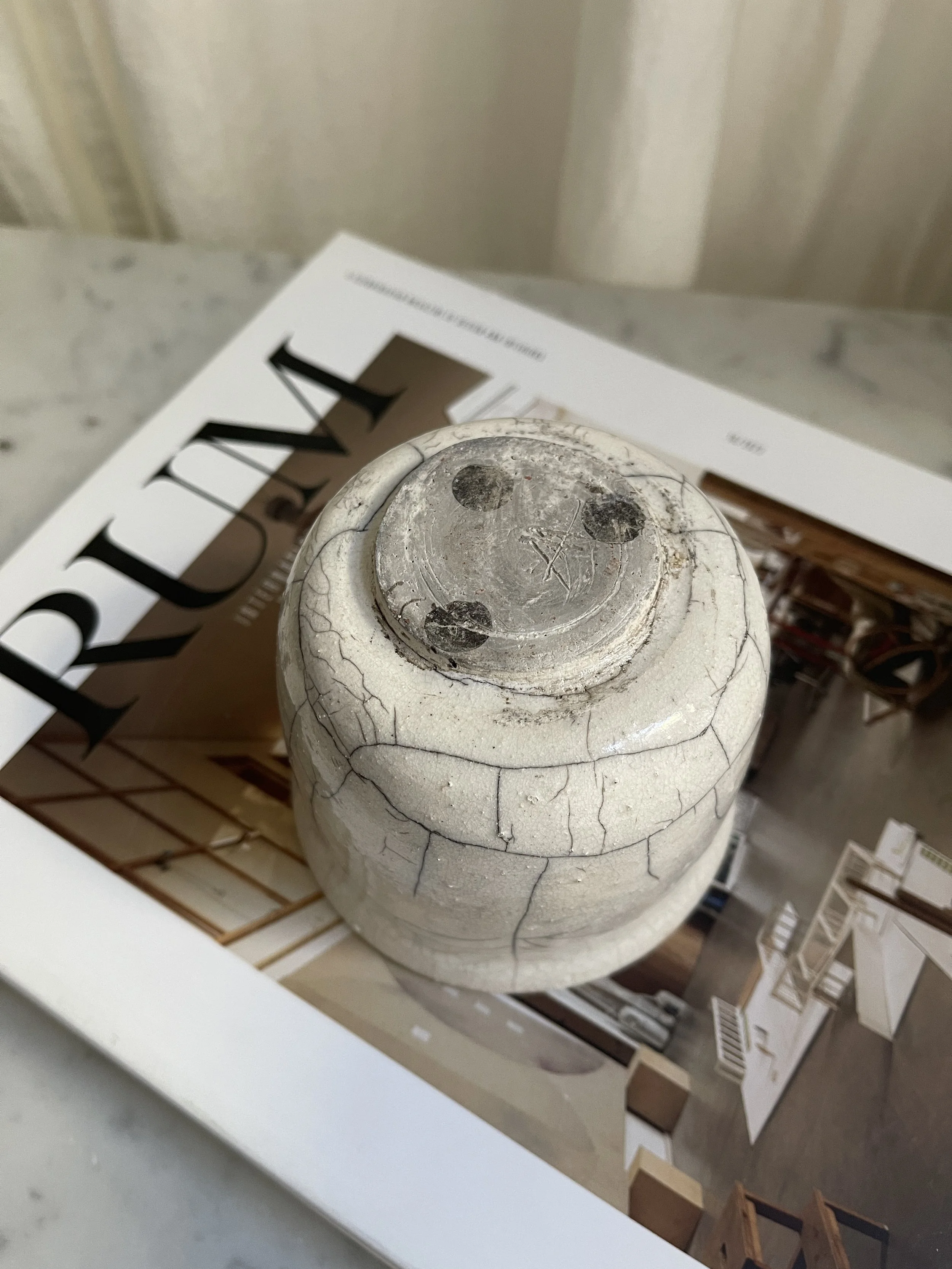 Image 4 of 4
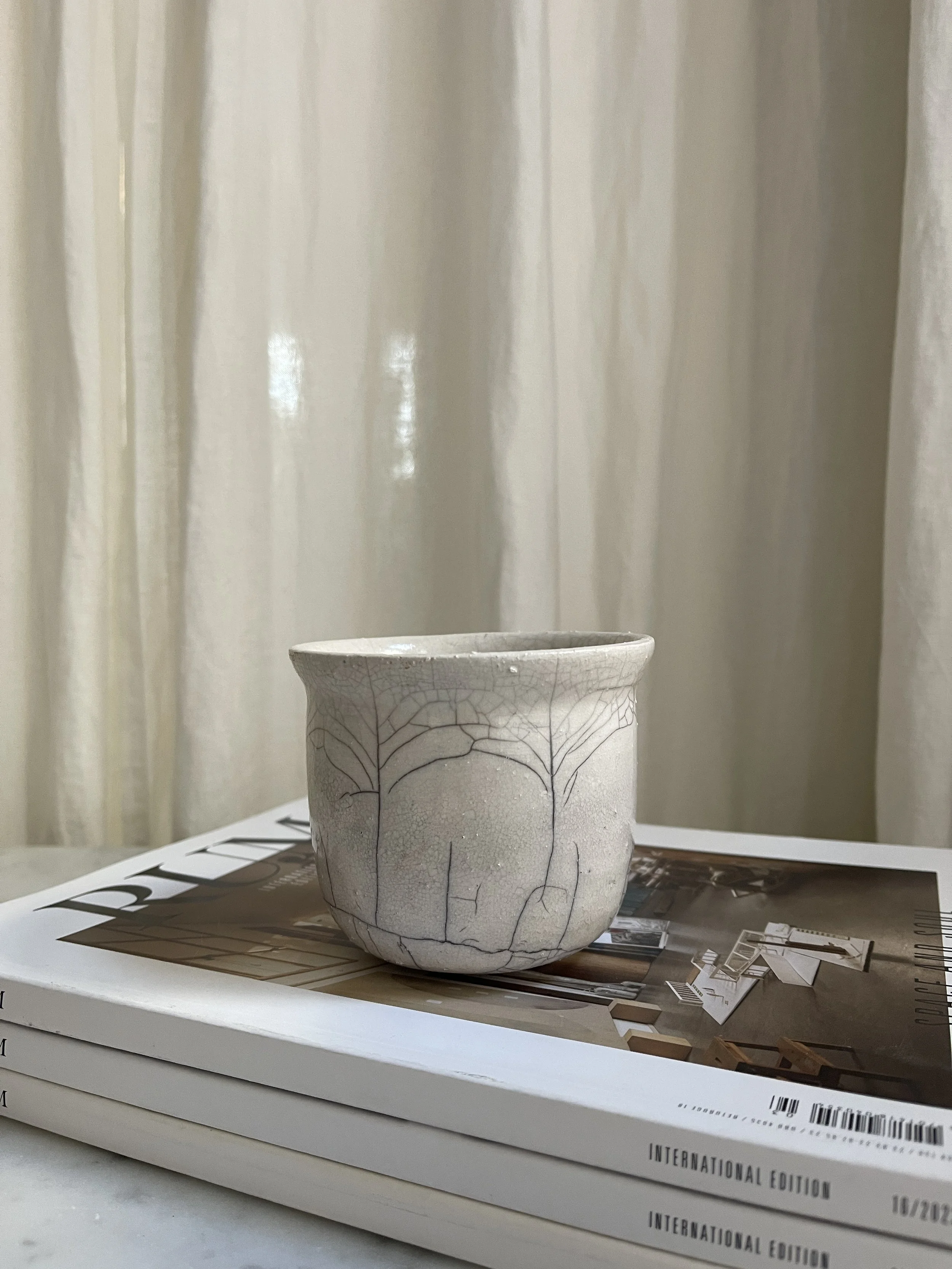
Hand-thrown raku pottery vessel in a soft, chalky white glaze with expressive crackle.
The surface is decorated with a hand-drawn tree motif — a central trunk with branching lines that dissolve into the natural crazing of the glaze, where fire and smoke have completed the drawing.
The piece bears an incised maker’s mark on the base, along with original firing stilt traces, characteristic of studio raku pottery. Each line and fracture is unique, shaped by chance, heat, and reduction.
Quiet, tactile, and grounded — a small object that carries a strong sense of presence.
Details
Origin: Studio pottery, likely Northern Europe / Scandinavia
Period: Late 20th century
Material: Raku-fired ceramic
Finish: Crackled white glaze with smoked lines
Mark: Incised maker’s mark to base
Condition: Very good vintage condition with firing-related irregularities
Use: Decorative object, brush holder, pencil cup, or planter with inner liner
Notes
Raku pottery is porous and not food-safe. Best appreciated as a sculptural or functional interior object.
Hand-thrown raku pottery vessel in a soft, chalky white glaze with expressive crackle.
The surface is decorated with a hand-drawn tree motif — a central trunk with branching lines that dissolve into the natural crazing of the glaze, where fire and smoke have completed the drawing.
The piece bears an incised maker’s mark on the base, along with original firing stilt traces, characteristic of studio raku pottery. Each line and fracture is unique, shaped by chance, heat, and reduction.
Quiet, tactile, and grounded — a small object that carries a strong sense of presence.
Details
Origin: Studio pottery, likely Northern Europe / Scandinavia
Period: Late 20th century
Material: Raku-fired ceramic
Finish: Crackled white glaze with smoked lines
Mark: Incised maker’s mark to base
Condition: Very good vintage condition with firing-related irregularities
Use: Decorative object, brush holder, pencil cup, or planter with inner liner
Notes
Raku pottery is porous and not food-safe. Best appreciated as a sculptural or functional interior object.