
 Image 1 of 5
 Image 2 of 5
 Image 3 of 5
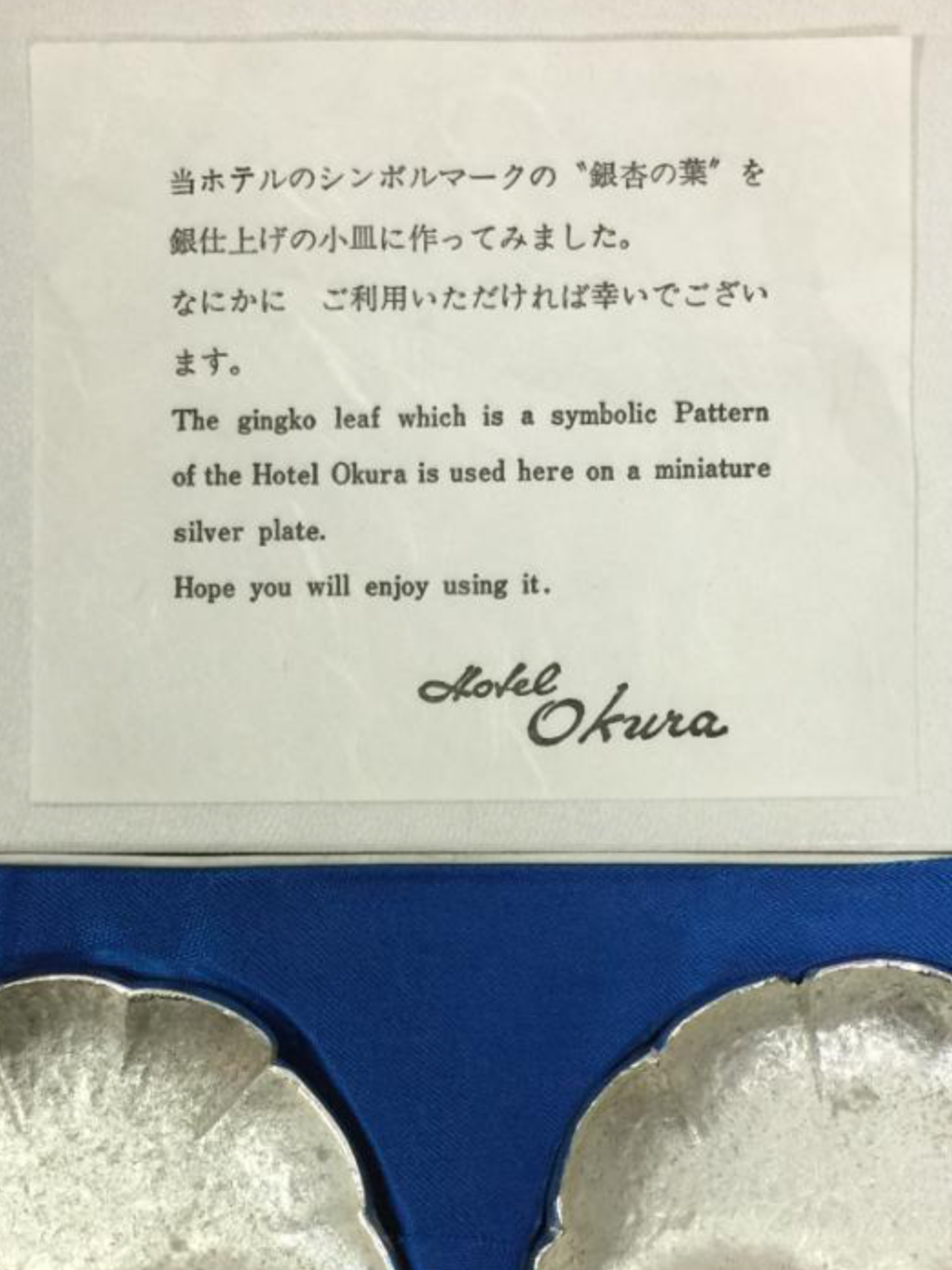 Image 4 of 5
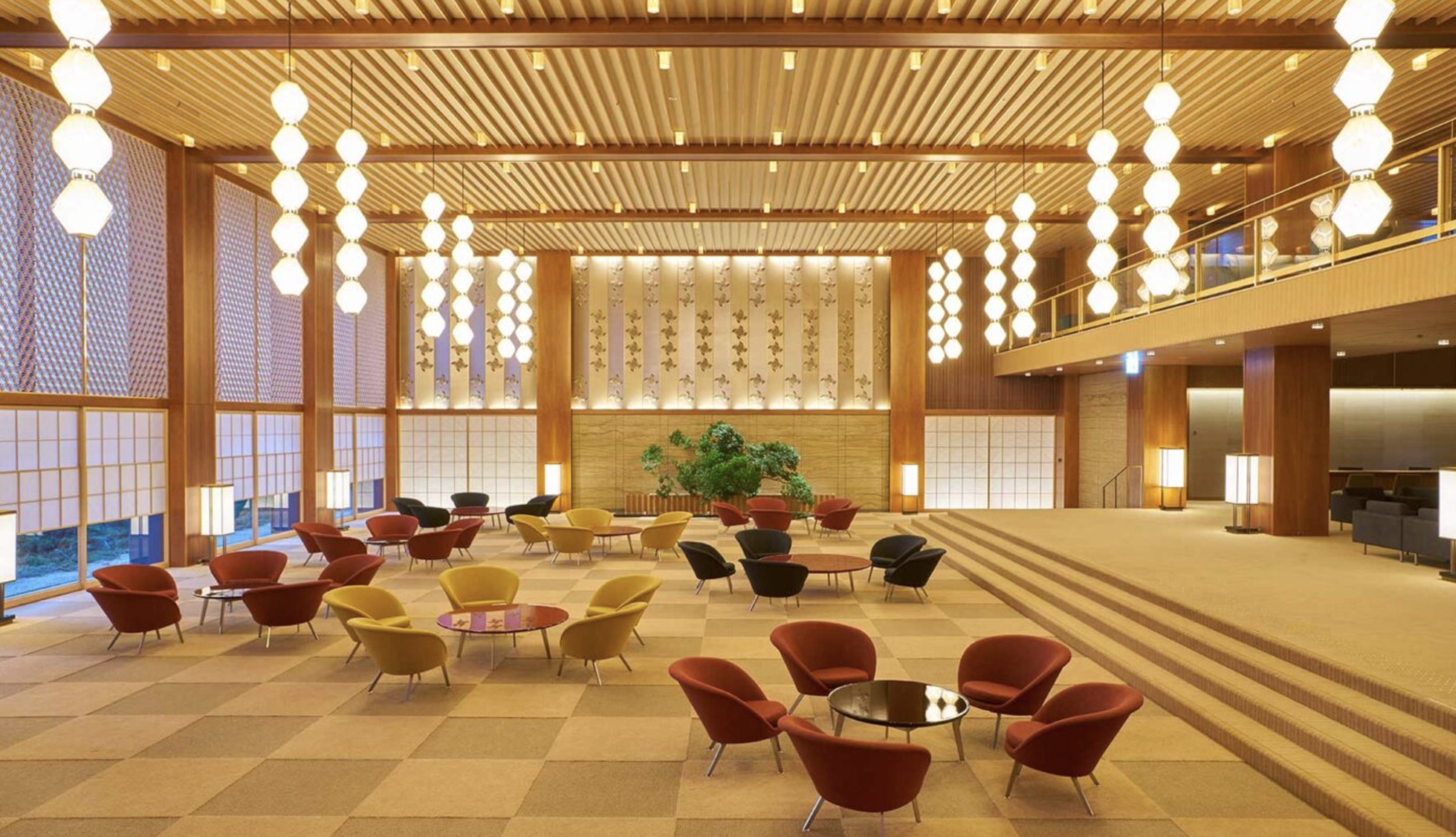 Image 5 of 5
A rare pair of miniature silver-finished plates from the iconic Hotel Okura Tokyo, featuring the hotel’s symbolic ginkgo leaf motif.
These sculptural objects were originally presented as exclusive guest gifts, reflecting the refined modernism of the legendary Okura interiors designed in 1962 — a landmark of post-war Japanese design where traditional motifs met international modern elegance.
Cast in solid metal with a softly textured surface and a beautiful, untouched patina, the plates echo the organic form of the ginkgo leaf — a symbol of longevity and resilience in Japanese culture.
The integrated finger opening allows the pieces to be held or presented gracefully, elevating them beyond simple tableware into small architectural objects.
A poetic meeting of Tokyo modernism and timeless minimal form. Increasingly difficult to source outside Japan, especially as a pair.
Hotel Okura Tokyo
More than a hotel, it was a philosophy: elegance through simplicity.
Opened in 1962, Hotel Okura became a quiet icon of Japanese modernism — where tradition met restraint, and luxury whispered instead of shouted.
The lobby became legendary. A serene, amber-lit space where diplomats, designers, and writers gathered beneath hexagonal lanterns and ikebana arrangements. It was modern, but deeply Japanese. International, yet rooted.
A rare pair of miniature silver-finished plates from the iconic Hotel Okura Tokyo, featuring the hotel’s symbolic ginkgo leaf motif.
These sculptural objects were originally presented as exclusive guest gifts, reflecting the refined modernism of the legendary Okura interiors designed in 1962 — a landmark of post-war Japanese design where traditional motifs met international modern elegance.
Cast in solid metal with a softly textured surface and a beautiful, untouched patina, the plates echo the organic form of the ginkgo leaf — a symbol of longevity and resilience in Japanese culture.
The integrated finger opening allows the pieces to be held or presented gracefully, elevating them beyond simple tableware into small architectural objects.
A poetic meeting of Tokyo modernism and timeless minimal form. Increasingly difficult to source outside Japan, especially as a pair.
Hotel Okura Tokyo
More than a hotel, it was a philosophy: elegance through simplicity.
Opened in 1962, Hotel Okura became a quiet icon of Japanese modernism — where tradition met restraint, and luxury whispered instead of shouted.
The lobby became legendary. A serene, amber-lit space where diplomats, designers, and writers gathered beneath hexagonal lanterns and ikebana arrangements. It was modern, but deeply Japanese. International, yet rooted.