Silver-plated | Shell motif | Rare utilitarian object
Once part of a daily ritual, this small silver-plated tea strainer dates to the turn of the 20th century — a time when tea was prepared slowly, with care and intention.
The softly perforated bowl rests gently on the rim of a cup, while the long handle keeps the hand away from heat. A delicate shell motif adorns the handle, a classical symbol of both protection and beauty, rendered here in a restrained, early-modern form.
Its surface carries a gentle patina from decades of use — not wear, but memory.
A quiet object with presence. Perfect for loose-leaf tea, herbs, or simply as a sculptural detail in the kitchen or on a shelf.
Details
• Origin: Europe
• Date: c. 1890–1915
• Material: Silver-plated metal
• Condition: Good vintage condition with age-related patina
• Marks: Unstamped, consistent with silver plate
Why it’s Rare
Objects like this were once commonplace and rarely kept. Today, they survive as fragments of slower rituals — both practical and poetic.
Silver-plated | Shell motif | Rare utilitarian object
Once part of a daily ritual, this small silver-plated tea strainer dates to the turn of the 20th century — a time when tea was prepared slowly, with care and intention.
The softly perforated bowl rests gently on the rim of a cup, while the long handle keeps the hand away from heat. A delicate shell motif adorns the handle, a classical symbol of both protection and beauty, rendered here in a restrained, early-modern form.
Its surface carries a gentle patina from decades of use — not wear, but memory.
A quiet object with presence. Perfect for loose-leaf tea, herbs, or simply as a sculptural detail in the kitchen or on a shelf.
Details
• Origin: Europe
• Date: c. 1890–1915
• Material: Silver-plated metal
• Condition: Good vintage condition with age-related patina
• Marks: Unstamped, consistent with silver plate
Why it’s Rare
Objects like this were once commonplace and rarely kept. Today, they survive as fragments of slower rituals — both practical and poetic.

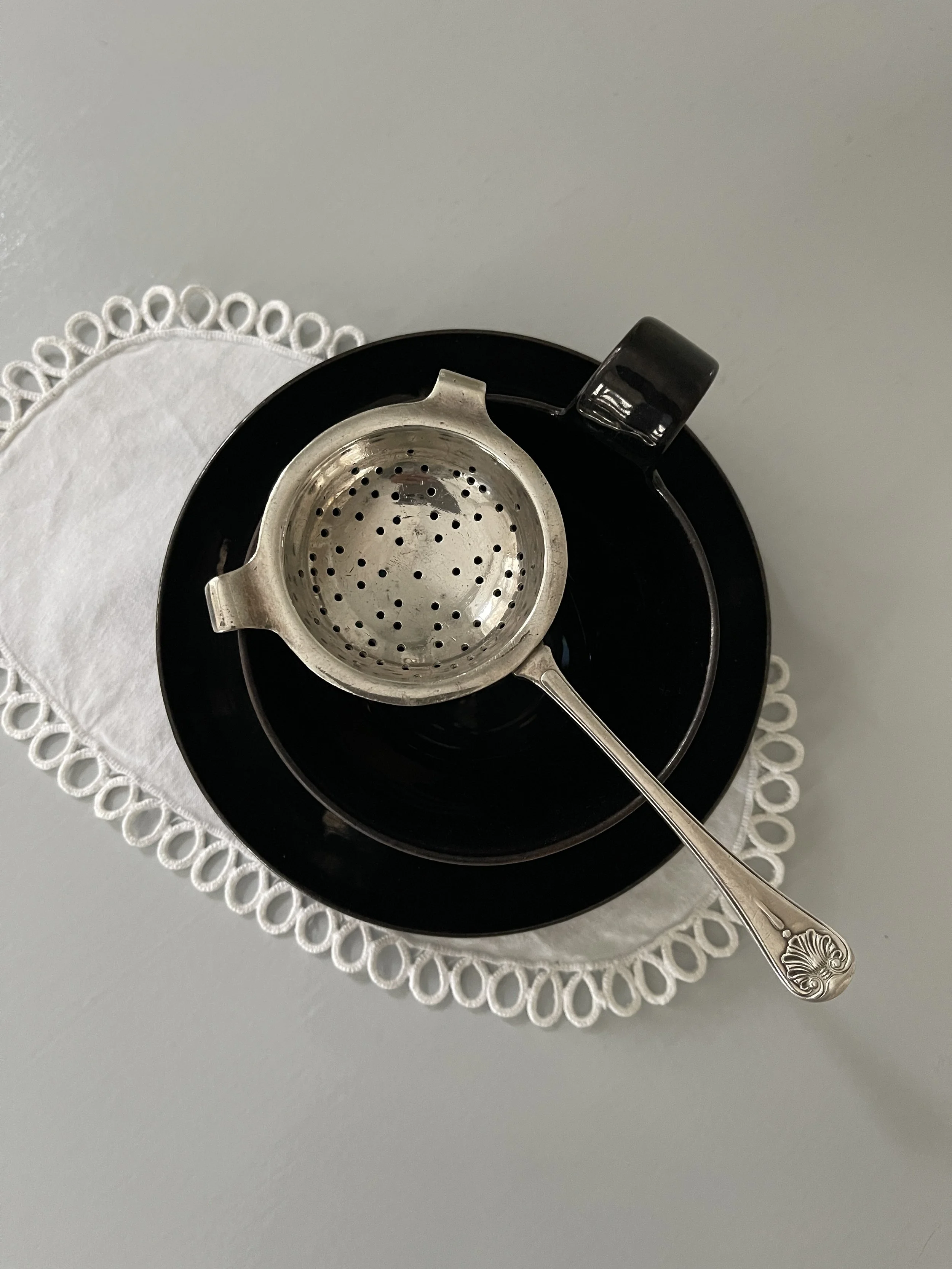 Image 1 of 6
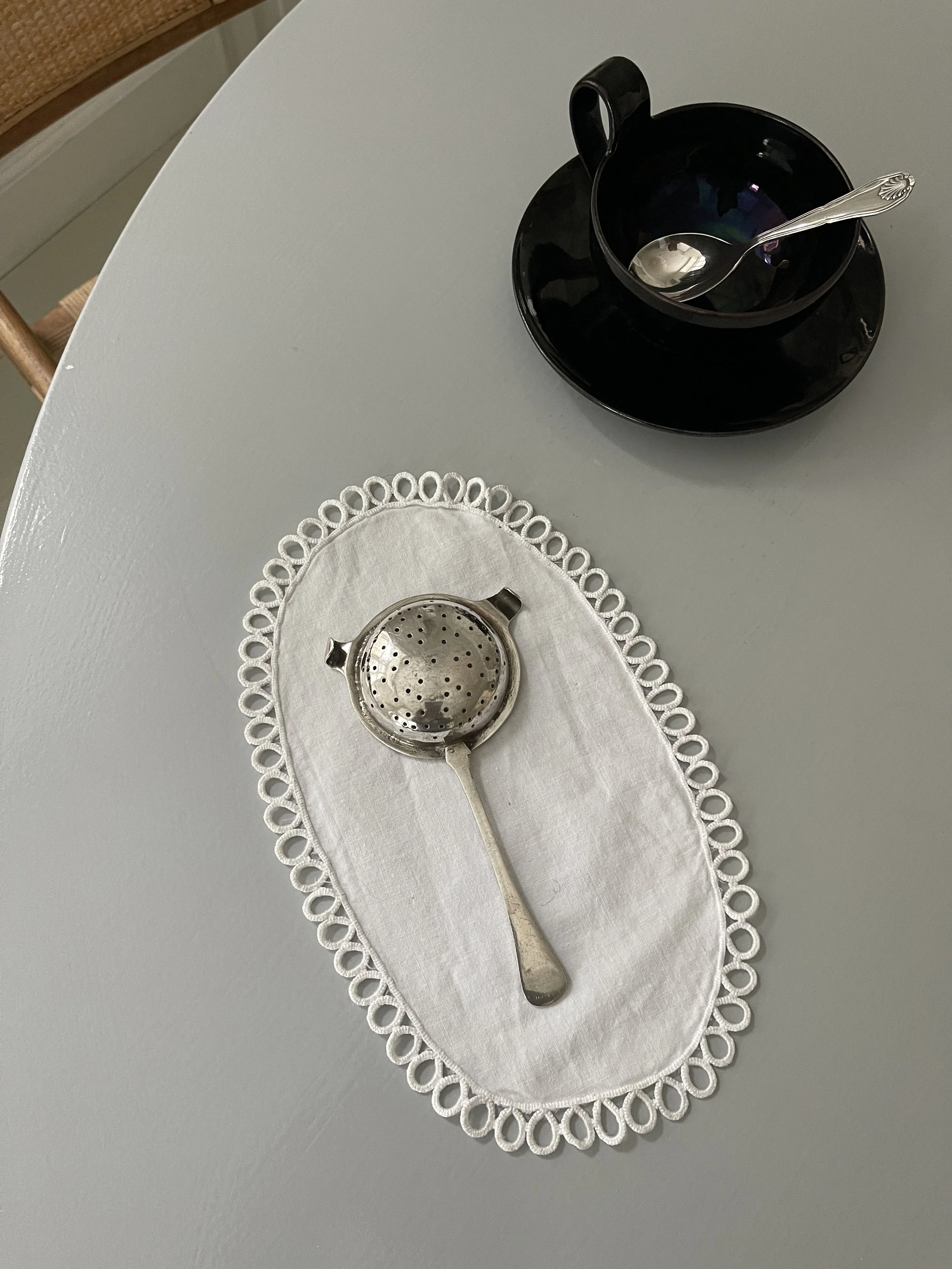 Image 2 of 6
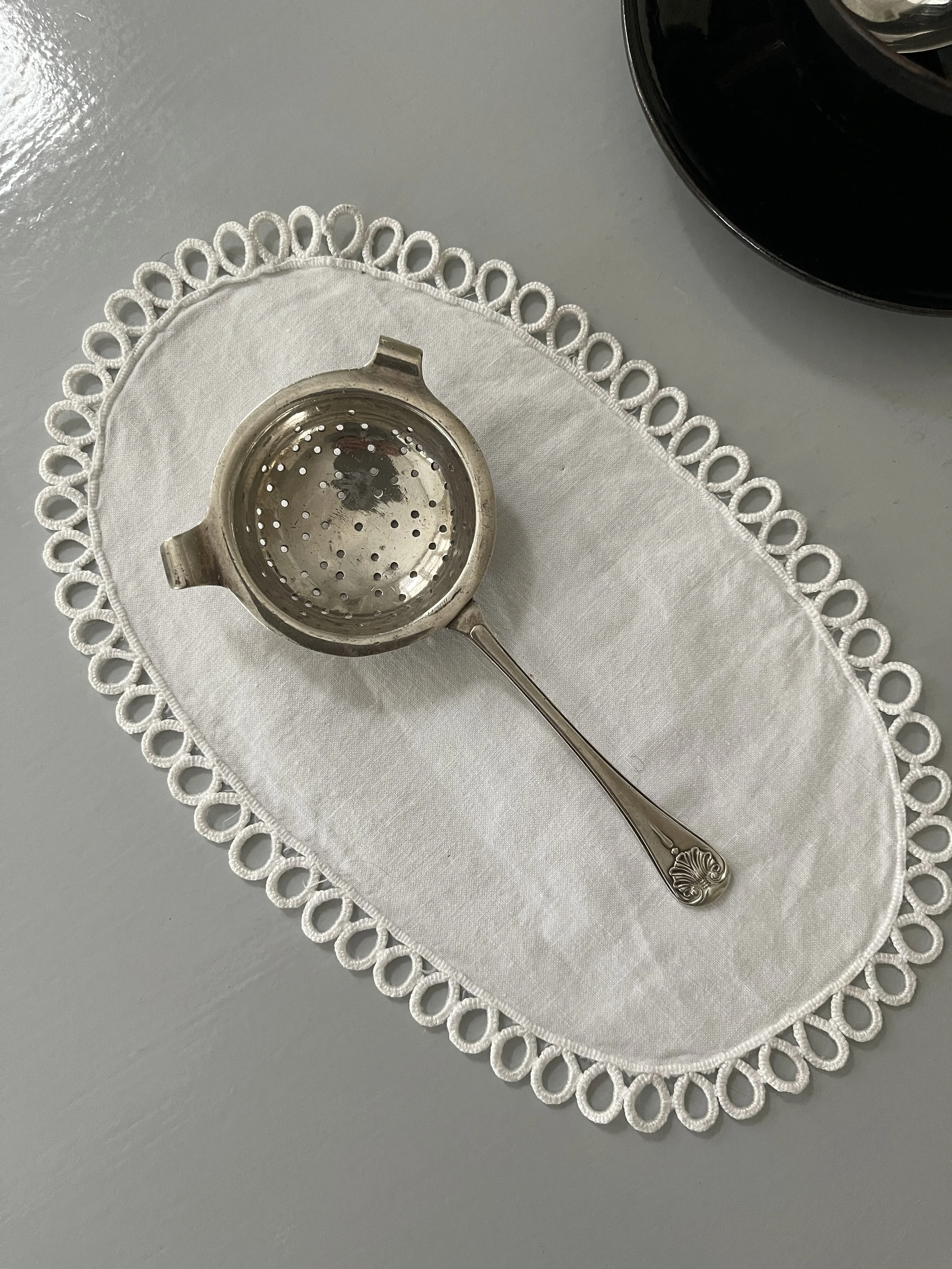 Image 3 of 6
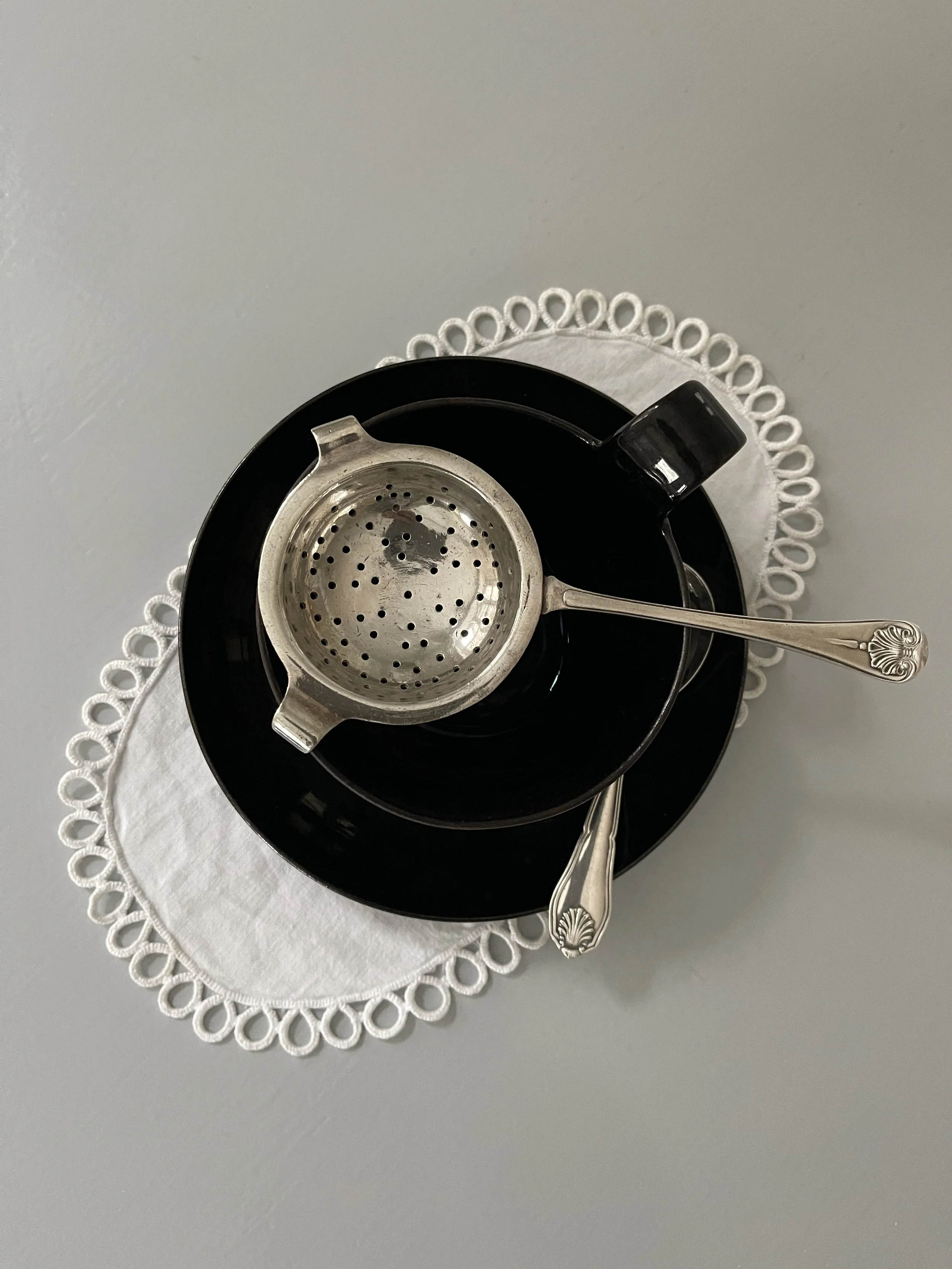 Image 4 of 6
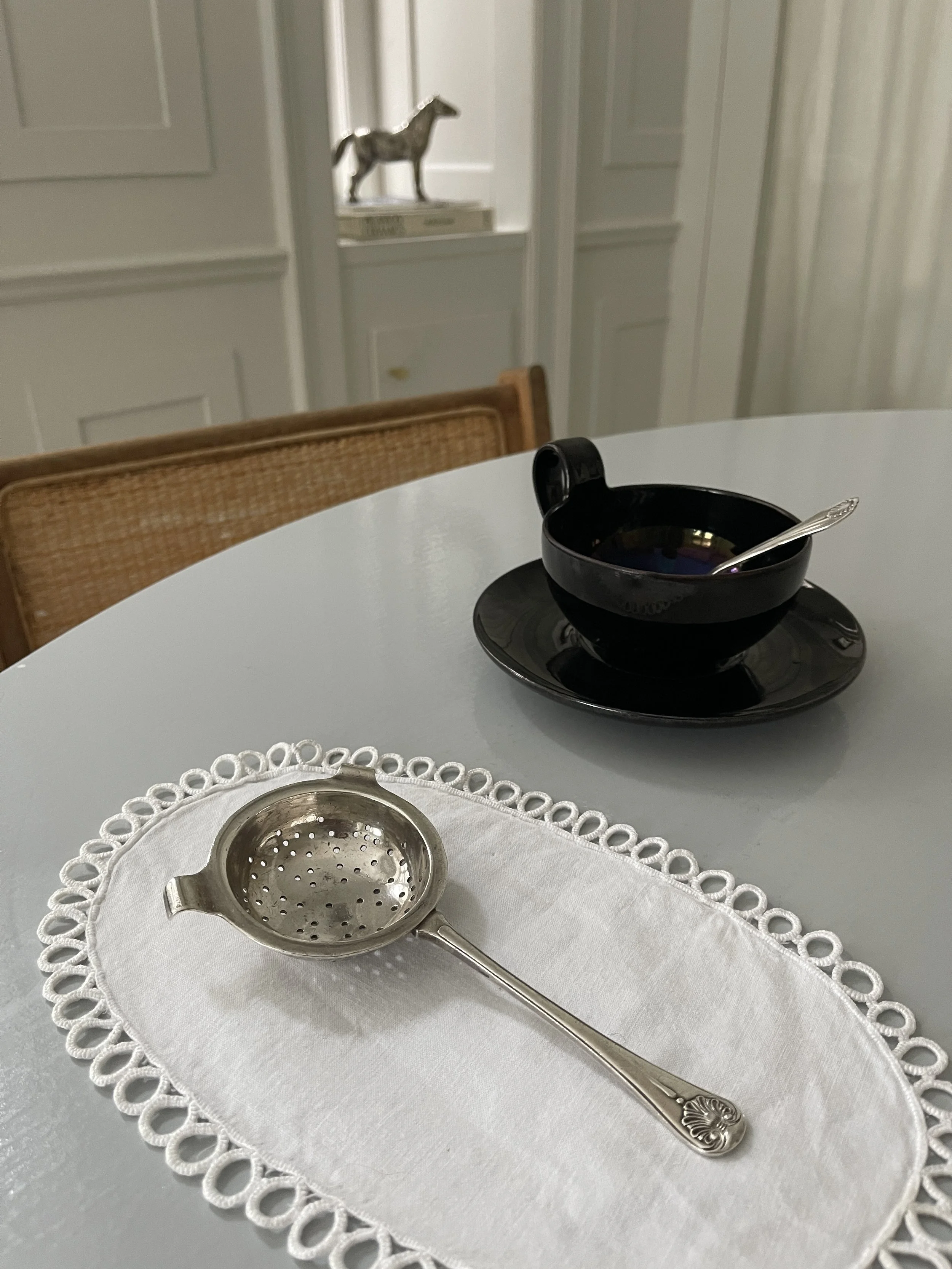 Image 5 of 6
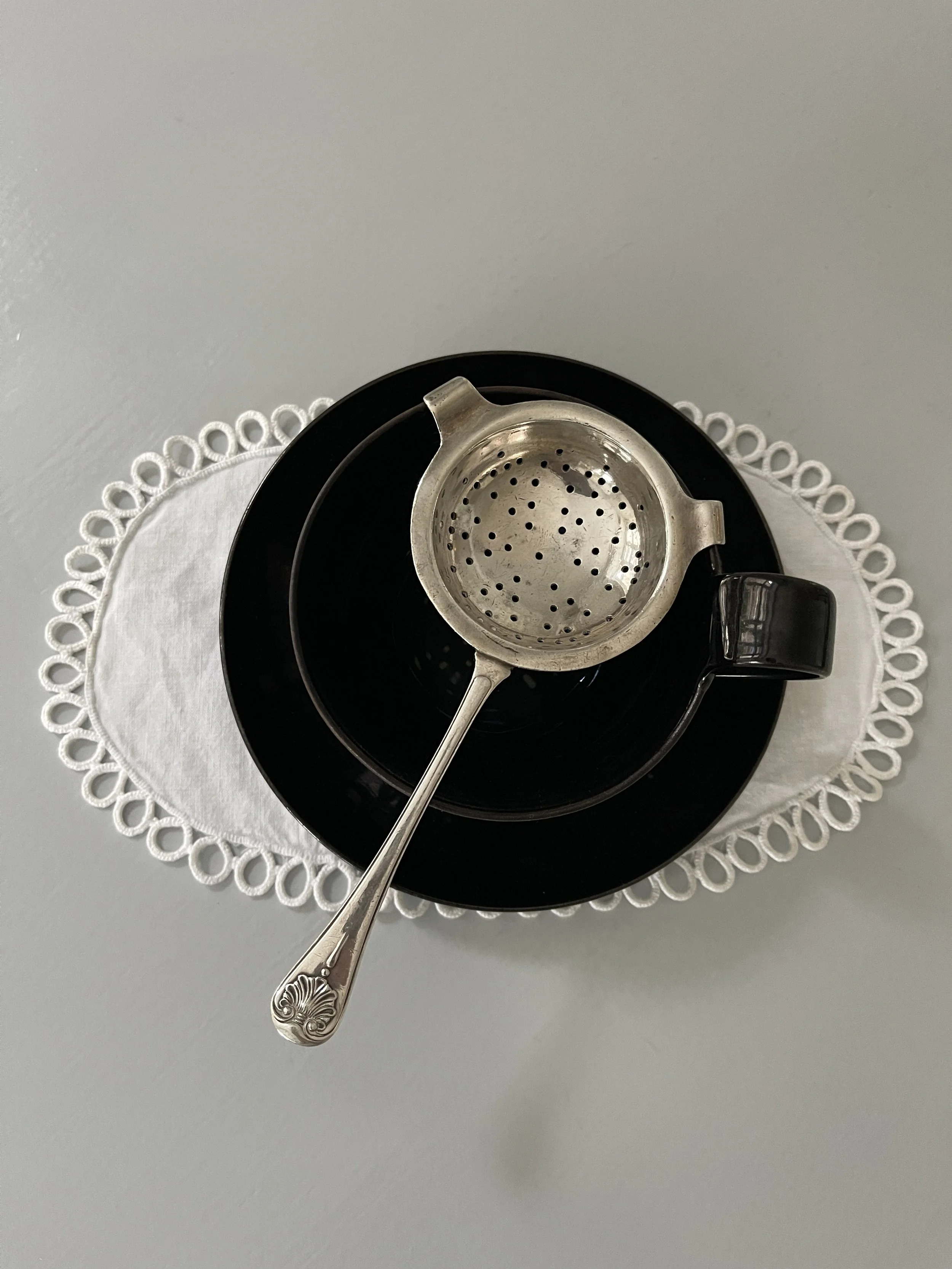 Image 6 of 6